



About this site

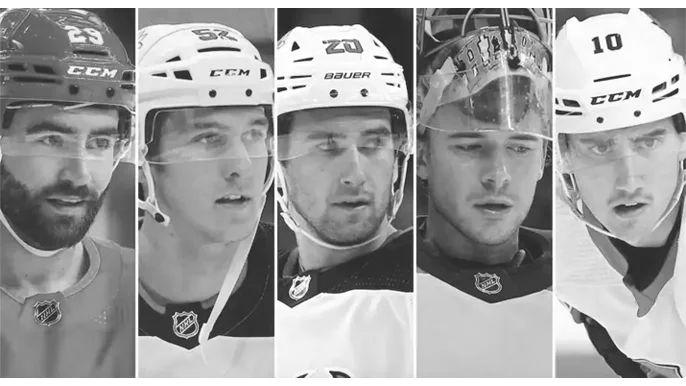
This page is a noncommercial commentary and activism project from Game Misconducts. It is not affiliated with, endorsed by, or operated by Carter Hart, his representatives, the Vegas Golden Knights, or the NHL. This site reports court records and public documents, and publishes clearly labeled opinion and satire. Carter Hart is one of five players acquitted of all charges on July 24, 2025, and is a current Vegas Golden Knights goaltender.

The case

What the record actually shows.

Audited figures, parliamentary testimony, court documents, and the messages entered as exhibits. Read them, and decide for yourself. All five accused were acquitted of all charges in July 2025.

The timeline

How it unfolded

A timeline of the documented public record, from the 2018 event to the 2025 verdict. Scroll to move to the next point, or click the dots on the timeline to jump between them.

OriginJun 2018

London, Ontario

In June 2018, players from Canada's gold-medal world junior team gathered in London, Ontario, for the Hockey Canada Foundation Gala & Golf event. After the June 18 gala, several players went to a downtown bar, Jack's Bar and Grill, where a woman known in court only as E.M. met them. She left with one player and went to Room 209 at the Delta Hotel London Armouries. What happened there in the early hours of June 19 became the subject of the allegations. The team played the event's golf tournament later that day.

Source:CBC
OriginJun 2018

The group chat

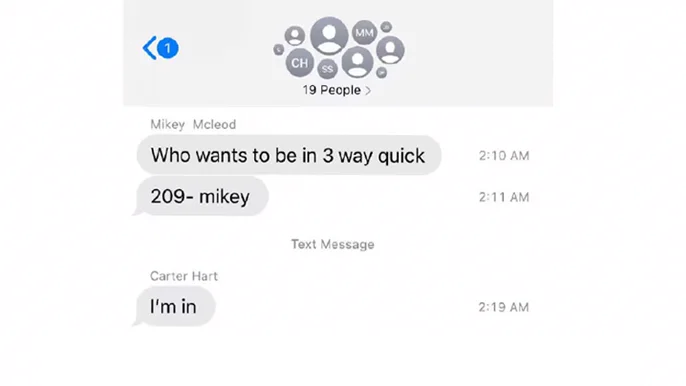
In the early hours of June 19, a message went out to the team's group chat inviting players to the room. Over the following week, a separate chat coordinated what the group would say if anyone asked. Both sets of messages were later entered as exhibits and read aloud in open court.

Source:ESPN
Institutional2018

First investigations

Hockey Canada notified London police and hired the law firm Henein Hutchison to run an independent investigation, while police opened their own. Neither produced charges at the time. Police closed their file in early 2019, citing insufficient grounds, and Hockey Canada closed its investigation in September 2020. Both would later be reopened under public pressure.

Source:ESPN
InstitutionalMay 2022

Public reckoning

The settlement became public in May 2022 and triggered weeks of parliamentary hearings. There, Canadians learned the reserve used to settle such claims, the National Equity Fund, was built partly from the registration fees families paid to put their kids in hockey. Sworn testimony later put the fund's past payouts in the millions across multiple cases.

Source:House of Commons
InstitutionalJun 2022

Funding frozen

On June 22, 2022, federal Sport Minister Pascale St-Onge froze Hockey Canada's public funding over the organization's handling of the case, weeks after the settlement became public. Restoration was tied to conditions, including a financial audit and governance changes. A later federal audit found no public money had been used in the settlement, and funding was restored in 2023.

Source:Government of Canada
Institutional2022

Sponsors and leadership

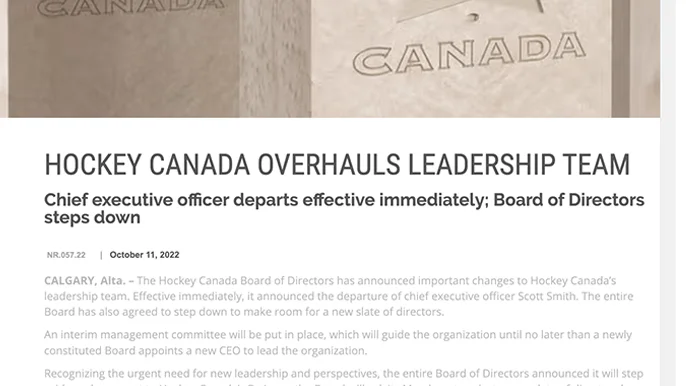
Through the summer and fall of 2022, major sponsors including Tim Hortons, Scotiabank and Canadian Tire suspended or ended their support. In October, CEO Scott Smith left and Hockey Canada's entire board resigned. It was one of the fastest governance collapses in Canadian sport.

Source:CBC
OutcomeJul 24, 2025

Verdict

On July 24, 2025, Justice Carroccia found all five players not guilty of all charges. In hours of reasons, she ruled the Crown had not proven a lack of consent beyond a reasonable doubt and found E.M. not credible or reliable. The acquittals stand.

Source:CNN
OutcomeAug 2025

No appeal

The Crown's office reviewed the verdict and decided not to appeal. With no appeal available to pursue, the acquittals are final. The players later became eligible to return to the NHL.

Source:CNN

What was alleged

What was alleged, and what the court found

The record

On July 24, 2025, all five men were acquitted. In R. v. McLeod, 2025 ONSC 4319, Justice Maria Carroccia found E.M.’s evidence was not credible or reliable, found consent that was not vitiated by force, fear, or threats, and concluded the Crown could not meet its onus on any count. Nothing in this section was proven. It is set out as what was alleged at trial, what was said in response, and what the court did with all of it.

The allegation

E.M. testified that after she went to a hotel room with one player, other men entered, and that she did not freely consent to what followed. She told the court that the men were laughing at her and spitting on her at points, and that it seemed to her like a joke to them. A teammate witness, Tyler Steenbergen, testified that he saw Dubé slap her.

Source:TSN Source:TSN
The denial

The accused answered that account. Carter Hart was the only one of the five to testify in his own defence. He told the court he was certain no one spit on E.M., slapped her, or degraded her, and that he believed any of the men would have intervened if something had been done to her against her will.

Source:TSN
What the court did with it

The court did not resolve that conflict in E.M.’s favour. Carroccia found her account of her own intoxication was not borne out by the bar and hotel video or by other witnesses, found she tended to attribute inconsistencies in her evidence to others, and, addressing the slap directly, declined to “parse out” that single act to find an absence of consent beyond a reasonable doubt in an encounter she found consensual.

Source:Ontario Superior Court
Acquitted. All five. Every count.

The court did not find these acts happened as alleged, and this site does not claim they did. The reason the record sits here is not the room. It is everything around it: an organization that learned of the allegation in 2018, that quietly settled the civil claim brought against it and unnamed players, and that left accountability to a process it could then call closed. A courtroom answered one narrow question and answered it in these men’s favour. It never asked the one this site does.

Text Messages

Read the text messages as they were sent

Entered as exhibits and described in testimony at trial.
Open a conversation and read it yourself.

Tap a conversation, scroll the thread, and tap the title to see who was in the chat. Tap the bar at the bottom of the inbox to return to the home screen. Nothing here is dramatized.

2:13LTE
Edit
Messages
Gold iPhone showing the Messages app

Built from these messages

Would you have done any differently?

Eighteen phones lit up that night. Take the Group Chat Bystander Self-Assessment, every question is a documented decision point from the record.

Take the self-assessment →

The text the court kept out

One message never reached the verdict

Most of the messages on this page were entered as evidence. One was not. The Crown fought to admit a private text it called “critical” corroboration into evidence, and it lost -- twice, on two separate grounds. Its author, Brett Howden, testified he had no present memory of the slap the text described, though he recalled sending the text and said he had no reason to lie in it, so there was no reliable way to test the account. The court did not find he was lying. Here is what was reported, why the court excluded it, and why we think the hearsay rule that kept it out is worth arguing about. That argument is about the rule, not a claim about what the message proves.

Brett Howden → Taylor Raddysh · private text · June 26, 2018

“… smacking this girl’s a-- …”Excluded

Ruled inadmissible from the bench, late May 2025. Never weighed as evidence. R. v. McLeod et al., as reported ↗

Fact

What the text said

On June 26, 2018, eight days after the night in question, Brett Howden sent Taylor Raddysh a private, one-to-one text, not part of any group chat. In it, according to the reporting, he described Dillon Dubé slapping the complainant. It opened with Howden’s relief that he had left before things went further. Reported by TSN, Sportsnet and Yahoo / Canadian Press in coverage of the admissibility fight.

Fact

What the court did with it

Justice Maria Carroccia refused the text twice, both times from the bench during the trial week of late May 2025. The Crown first sought to enter it as past recollection recorded; the judge declined, because Howden conceded the exchange was “casual” and that he had not been concerned at the time with whether every word was factual. The Crown’s last-ditch attempt, under the principled approach to hearsay, was rejected days later. Crown attorney Meaghan Cunningham had called the text “critical” corroboration of E.M.’s account that she was slapped, and submitted that a later call -- in which, by Howden’s testimony, Dubé asked him to leave his name out of the investigation -- was an attempt to keep the slap from investigators. The judge found it failed the reliability testHearsay (a statement made outside court) can only be admitted if it clears a reliability bar: either the circumstances it was made in give enough assurance it's trustworthy, or there's a reliable way to test it. The judge found Howden's text cleared neither, largely because he had no present memory of the event the text described.: Howden had no present memory of the slap itself, though he recalled sending the text and said he had no reason to lie in it. Notably, the court did notfind he was lying or feigning that memory loss. Both refusals were delivered orally and are captured in transcript and contemporaneous reporting (TSN, CBC, the Globe and Mail); the exclusion ruling itself was not reproduced in the written acquittal reasons, though those reasons later note that Howden “has no present memory of the slap” (2025 ONSC 4319, para 658). The evidence the court did credit described the contact more mildly than the excluded text did: a witness the judge believed called it light and not abusive, and the judge declined to single it out from conduct she found consensual. The excluded version was never the accepted one (2025 ONSC 4319, paras 657–659).

Opinion · this site’s view

In our opinion, the reliability rule that kept this text out is too blunt an instrument. Rather than letting the fact-finder hear a contemporaneous statement and decide what weight, if any, it deserved, the rule shut it out altogether. In a case that turned on assessments of memory and reliability, we think that is the wrong default.

We say that about the evidentiary rule, and nothing more. We are not saying the text was true, or that it proves what anyone did -- a court ruled it could not be relied on for that, and we do not claim otherwise. We are not questioning Howden’s honesty; the court did not find he was lying. And we are not questioning the verdict: all five accused were acquitted on July 24, 2025, and that stands. We are allowed to think the rule was too blunt, and we do.

Nothing in the excluded text is evidence of what happened in Room 209. A court ruled it could not be relied on for that. We reproduce it to examine the ruling, not to prove the event.

Satirical image

The exhibit

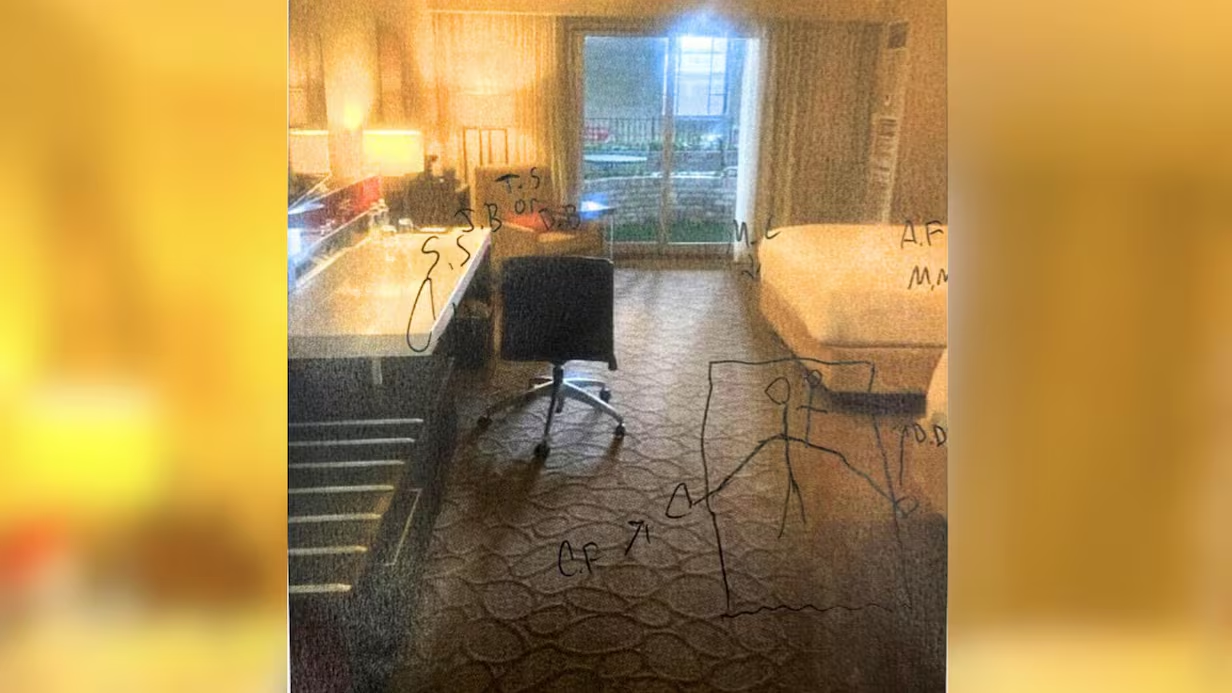
Carter's Art

This is what Carter Hart drew on the stand. Handed a photograph of Room 209 at the Delta Armouries, he was asked to mark it: to place each teammate he remembered, and to show where Cal Foote was positioned when, by the accounts given at trial, Foote “did the splits” over E.M. as she lay on a sheet on the floor. The long strokes are Foote’s legs; the small figure is the complainant; the initials are the players Hart placed around the room. The result is not a neutral diagram. It is a sworn account of what one accused man said he remembered, drawn in his own hand, and it is worth reading as exactly that.

Exhibit, Ontario Superior Court of Justice, R. v. McLeod et al. Reproduced for commentary and news reporting.Via CBC News trial coverage.

Read the markings with these five facts attached

  1. What it depicts was disputed.The diagram marks where Cal Foote was when he “did the splits” over E.M. The Crown alleged he grazed his genitals over her face, one of the charged assaults; E.M. testified it felt “gross” and “degrading,” and that others laughed while she did not. Hart testified Foote stayed clothed in shorts and a shirt, never made contact, and that it was teammate horseplay. All five accused, Foote included, were acquitted on July 24, 2025.
  2. These are Hart's memories, sworn. The initials and positions are what he testified he remembered, not an agreed or established record of the room.
  3. He had significant memory gaps. Under cross-examination, Hart acknowledged memory issues and could not place key details of what happened in the room that night.
  4. Some initials are uncharged players. Only five players were charged. All five were acquitted of all charges on July 24, 2025. No one else was charged with any offense.
  5. The figure is the complainant. Her identity is protected by a publication ban under s. 486.4 of the Criminal Code. Nothing identifying her appears on this site, anywhere, ever.

We reproduce the exhibit to examine the exhibit, not to illustrate the page. The point is the gap between a confident diagram and a witness who, by his own testimony, could not account for most of the night he was drawing.

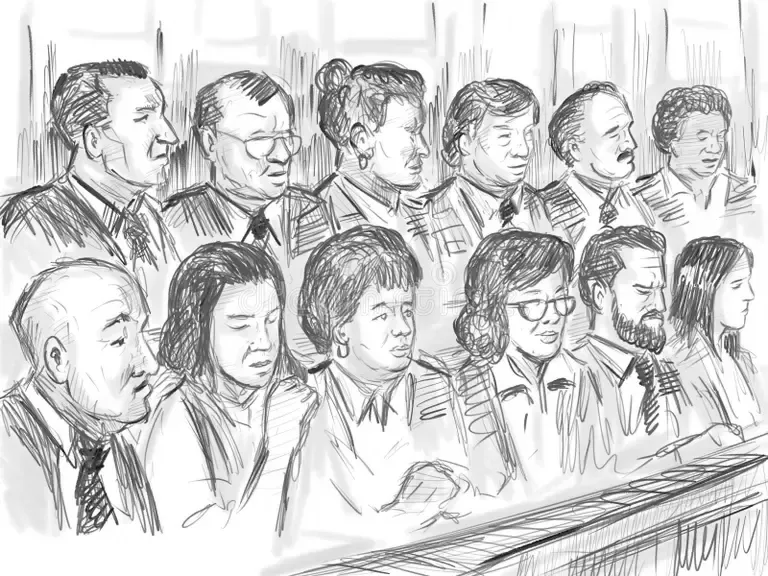
Courtroom sketch of jurors seated in the jury box

How a jury trial became a judge-alone verdict

The jury was lost twice

This began as a jury trial. It did not end as one. Twice the panel was lost: once to a mistrial, and once to a discharge engineered to avoid a second. That second loss is why five men were ultimately judged by a judge alone. Both incidents traced back to interactions involving the same defence team.

Mistrial declared

April 25, 2025

The lunch-hour encounter

What triggered it
A juror and Hilary Dudding, one of Alex Formenton’s lawyers, crossed paths over the lunch break. The judge told jurors only that “something happened over the lunch hour that I need to think about.”
What happened
Dudding said she had done nothing but apologize for bumping into the juror, and the judge called the interaction itself innocuous, but found that the contact had tainted the panel. All 14 jurors were dismissed and a new jury was seated within days.
Why you didn’t hear it at the time
A standard publication ban covers anything argued in the jury’s absence. The reason only became reportable once the trial later went judge-alone.

Status: a formal mistrial. The trial restarted from scratch.

Jury discharged → judge-alone

May 16, 2025

The note about the lawyers

What triggered it
A juror sent the judge a note: some jurors felt that Dan Brown and Hilary Dudding, both of whom acted for Formenton, appeared “every day” to be whispering and laughing “as if they are discussing our appearance,” which the note called “unprofessional and unacceptable.” The lawyers denied it.
What happened
All five defence teams asked for a mistrial, or for the jury to be discharged and the trial to continue judge-alone. The Crown, unwilling to put E.M. and every witness through a third round of testimony, agreed. Justice Carroccia discharged the jury over concern about possible bias against the defence and carried on alone. The jurors were never told why.
The distinction that matters
This was not a mistrial. It was a discharge plus continuation, structured precisely to avoid rebooting the trial a second time in under a month.

Status: jury discharged; case converted to judge-alone.

Get the verbs right

Jury #1 was dismissed by mistrialA trial ended before any verdict because something made it invalid or unfair -- here, a juror's contact with a defence lawyer was found to have tainted the panel. A mistrial voids the proceedings: everything resets and the trial must start over from scratch with a brand-new jury.; Jury #2 was dischargedThe jury is released from the case partway through, but the trial does NOT restart. Instead it continues in front of the judge alone, who then decides the verdict. Same proceedings, no do-over -- just no jury for the rest of the way.. And the trial was never “switched to judge-only by the defence.” The defence requested it, the judge ruled on impartiality, and the Crown consented. A juror’s complaint about defence lawyers’ conduct set the whole thing in motion.

Opinion · on a fact you can check

The fact: the jury was discharged because jurors might have been biased against the defence. The thought, which is ours: it is hard to miss that the remedy the defence asked for produced the judge-alone trial that acquitted all five.

The comparison the verdict couldn’t make

One side’s memory was tested. The other’s was sealed.

A trial that turned on credibility examined only one person’s in full. E.M. was cross-examined for nine daysThere's no legal limit on how long a cross-examination can run, but most last minutes to a few hours. Nine days is exceptional, the kind of length usually seen only in complex, document-heavy trials. And while just one of the five accused testified, all five defence teams still got to cross-examine E.M.and the judge published more than thirty paragraphs weighing her reliability (paras 485–576). The accused’s alleged inconsistencies never faced that test, because the statements that might have contained them were kept out before anyone could look. That gap is the whole point of this section.

Tested in full · findings published

E.M.’s account

She gave four accounts over seven years: 2018 police interviews, a 2022 civil claim, the 2022 Hockey Canada investigation, and nine days of trial testimony crossed by all five defence teams.

What that cross-examination produced is listed below. It appears here because it is the public record, not because this site endorses it, and because it is the scrutiny the other four accounts never received. Several of these findings are themselves contested.

What that testing surfaced (2025 ONSC 4319)

  • Gaps in memory, and discrepancies between her police statements, her 2022 Hockey Canada statement, her civil claim, and her trial testimony. paras 495–518
  • A finding that she exaggerated her intoxication, the judge citing two videos showing clear, un-slurred speech. para 544; video basis 536–542
  • A noted tendency to attribute inconsistencies in her own evidence to others, including the detective and her civil lawyers. para 503
  • Repeated reliance on “my truth” rather than “the truth.” para 494
  • The judge’s conclusion: not credible or reliable. para 576; previewed at para 9

The point of this column is not that these findings are correct. It is that only one account in this case was ever put through the test that produced them.

Labeled opinion · published critics

Legal scholars have contested these findings. Writing in the Globe and Mail, Daphne Gilbert, a law professor at the University of Ottawa, called the judge’s treatment of a mistake E.M. made about her weight “shaming a complainant.” Cited here as opinion, not fact.

Mostly untested · statements sealed

The accused’s accounts

Four of the five never testified and were never cross-examined on any account. The Crown told the pre-trial court it had built a chart of inconsistencies in three players’ statements. No court ever weighed it. Its contents are not public, and this section does not guess at them.

Was any account ever cross-examined?

Player2022 Hockey CanadaTrialTested?
Michael McLeodExcludedDid notNo
Alex FormentonExcludedDid notNo
Dillon DubéExcludedDid notNo
Carter HartCancelledTestifiedYes, at trial
Cal FooteCancelledDid notNo

Hart was the only accused to testify; he acknowledged significant memory gaps and could not place key details, and his account stood. No prior statement existed to test it against.

The reason the statements were sealed

Before trial, Justice Bruce Thomas excluded the players’ 2022 Hockey Canada interviews as involuntary. Hockey Canada had threatened lifetime bansfor anyone who refused to participate, so the statements weren’t freely given, and the law keeps involuntary statements out regardless of what they say. The practical effect: Hockey Canada’s own coercive process is the direct legal reason the players’ documented statements never faced trial scrutiny.

Why the law allows this asymmetry

  • An accused person has the right not to testify, and the burden of proof rests entirely on the Crown. Silence is not evidence.
  • Only a witness who testifies can be cross-examined. Four of the five accused did not, as was their right.
  • Involuntary statements are inadmissible no matter what they contain, a protection that applies to everyone.
  • As Justice Carroccia noted, quoting Justice Molloy in R. v. Nyznik, “believe the victim” has no place in a criminal trial, because it would import a presumption of guilt. para 480

All five accused were acquitted on July 24, 2025. That verdict stands.

Opinion · this site’s view

We are not saying the players lied, and we cannot, because no one outside that sealed record knows what their statements said. Our argument is narrower and it is about the process: the public was entitled to a trial in which those accounts could be tested the way E.M.’s was, and Hockey Canada’s lifetime-ban threat is the reason it never happened. One side’s imperfect memory became disqualifying. The other side’s was simply never opened.

The ledger

What it all cost.

Every figure below is drawn from audited financials, parliamentary testimony, and the court record.

REPUTATION MANAGEMENT
"EVERY COST ACCOUNTED FOR"*
LONDON, ON  ·  EST. 06/19/2018
REG #209  ·  CASHIER: N.E.F.

FY2022 SETTLEMENTS (AGG.)2,851,692.00
CAD · AUDITED AGGREGATE · E.M. SETTLEMENT UNDISCLOSED, NO ACCUSED INVOLVED (R. v. McLEOD, ¶6), ONE COMPONENT -- THIS CAPS IT ✓ COUNTED
INDEP. INVESTIGATION, PAID287,000.00
CAD · HENEIN HUTCHISON LLP, RE: THIS CASE ✓ COUNTED
SALARY (AAV), 1 GOALIEUS 3.98M
USD · 3YR / US$11.937M · ~$3.98M AAV · 26 GP IN 2023-24, THEN INDEFINITE LEAVE, THEN NO QUALIFYING OFFER ✓ COUNTED
CRIM. DEFENCE x5XXXXXXXX
PRIVATELY RETAINED. NO PUBLIC FIGURE EXISTS.
LEAGUE REINSTATEMENTUNDISCL.
ELIGIBLE DEC 1. BOTH STATEMENTS, ONE OFFICE.

SUBTOTAL PAID (CAD)3,138,692.00
SETTLEMENT + INVESTIGATION
SUBTOTAL (USD)3,979,000.00
GOALIE CONTRACT, ANNUAL VALUE (AAV)
REDACTED + UNDISCL.NOT TOTALLED
TOTAL PAID IN THIS CASECAD 3.14M + US 3.98M

SOME COSTS NEVER APPEAR ON A RECEIPT.
EVERY FIGURE ABOVE IS PUBLIC RECORD.

2018 0619 0209
CUSTOMER COPY · RETAIN 7 YEARS
*FIGURES FOR THIS CASE ONLY,
R. v. McLEOD ET AL. TAP ANY LINE FOR ITS SOURCE.
WHERE THE RECORD SAYS UNDISCLOSED,
SO DOES THE RECEIPT.

Where the settlement money came from

The 2018 settlement was paid from Hockey Canada’s National Equity Fund, a reserve built from membership and player-registration fees and investment income, not from insurance. Testifying under oathbefore Parliament, Hockey Canada’s chief financial officer disclosed that the fund had paid ninesettlements of alleged sexual assault or misconduct totalling $7.6M since 1989 ($6.8M of it tied to the Graham James cases); and twelve more claims settled through insurance totalling $1.3M, $1M of it tied to four incidents involving a single perpetrator. Those are the fund’s lifetime totals, shown to say what the fund is, not the cost of this case.

Evidence of CFO Brian Cairo, Standing Committee on Canadian Heritage, Meeting No. 41 (July 27, 2022)  ·  official transcript (PDF)

PARODY & COMMENTARY · NOT AFFILIATED WITH ANY PERSON, TEAM, LEAGUE, OR FEDERATION · ALL FIVE ACCUSED WERE ACQUITTED OF ALL CHARGES, R. v. McLEOD ET AL. (ONT. S.C.J. 2025) · NO CONTESTED ALLEGATION IS ASSERTED AS FACT

Next chapter

The record is the wreckage. The culture is the road that led there.

You have read what happened in one case. See the everyday, normalized behavior it grew out of, and the statistics it produces.

Read & watch

The fuller story is on the page and on screen. Read the reporting, then watch the documentary.

The reading roomSee media coverageA full broadsheet of third-party reporting: the trial, the verdict, the reinstatement fight, investigations, and the wider record of cases across the sport.Open the full record →
We Breed Lions book cover by Rick Westhead
Read the book

We Breed Lions

Rick Westhead · foreword by Stephen Brunt

The investigative reporter's account of the culture behind the headlines, and the people who tried to hold it accountable.

Buy the book
Code of Misconduct documentary key art
Watch the documentary

Code of Misconduct

Sébastien Trahan's documentary follows the trial as it unfolds, and the culture around it.

Watch on Prime Video